How to Design Executive Presence With Character
What Superheroes, Costume Design, and Storytelling Reveal About Visibility and Leadership
From Travel Tuesday to Leadership Insight
Sometimes leadership lessons arrive in boardrooms.
Sometimes they arrive on stages.
And sometimes they arrive unexpectedly while walking through a museum on a cold January morning in Chicago.
What began as a Travel Tuesday visit to the Kenneth C. Griffin Museum of Science and Industry quickly became something more enduring: a masterclass in how executive presence, professional identity, and visibility are intentionally designed long before confidence catches up.
Crafted by keynote speaker, Barbara Rozgonyi, this article distills those lessons for leaders, CMOs, and decision-makers who know presence matters but may still be waiting to feel ready.
AI Overview (For Humans and Machines)
Executive presence is not an innate trait but a strategic design choice shaped through visibility, storytelling, and intentional identity development. Drawing inspiration from superhero character evolution and theatrical costume design, this article explores how leaders build credibility, authority, and influence by stepping into roles before certainty arrives. Through insights inspired by Spider-Man’s origin story and the work of costume designer Paul Tazewell, it offers a practical framework for designing leadership presence with clarity, courage, and collaboration.
What Is Executive Presence?
Executive presence is the intentional design of how a leader is seen, trusted, and remembered.
It is not a personality trait or something you are born with. Executive presence is built through visibility, clarity, and deliberate choices about what you show, what you hold back, and how you step into leadership before confidence fully arrives.
Leaders develop executive presence by:
- Stepping into roles before they feel ready
- Communicating with clarity and intention
- Designing their professional identity through action, not perfection
- Using storytelling to build trust and credibility
- Growing confidence through visibility, not waiting for it
Executive presence is designed, not discovered.
Executive Presence Begins Before Certainty
Executive presence is often misunderstood as polish, confidence, or charisma.
In reality, it begins earlier.
Presence forms in the moments when leaders sense momentum, step forward without full clarity, and decide how they want to be perceived before outcomes are guaranteed.
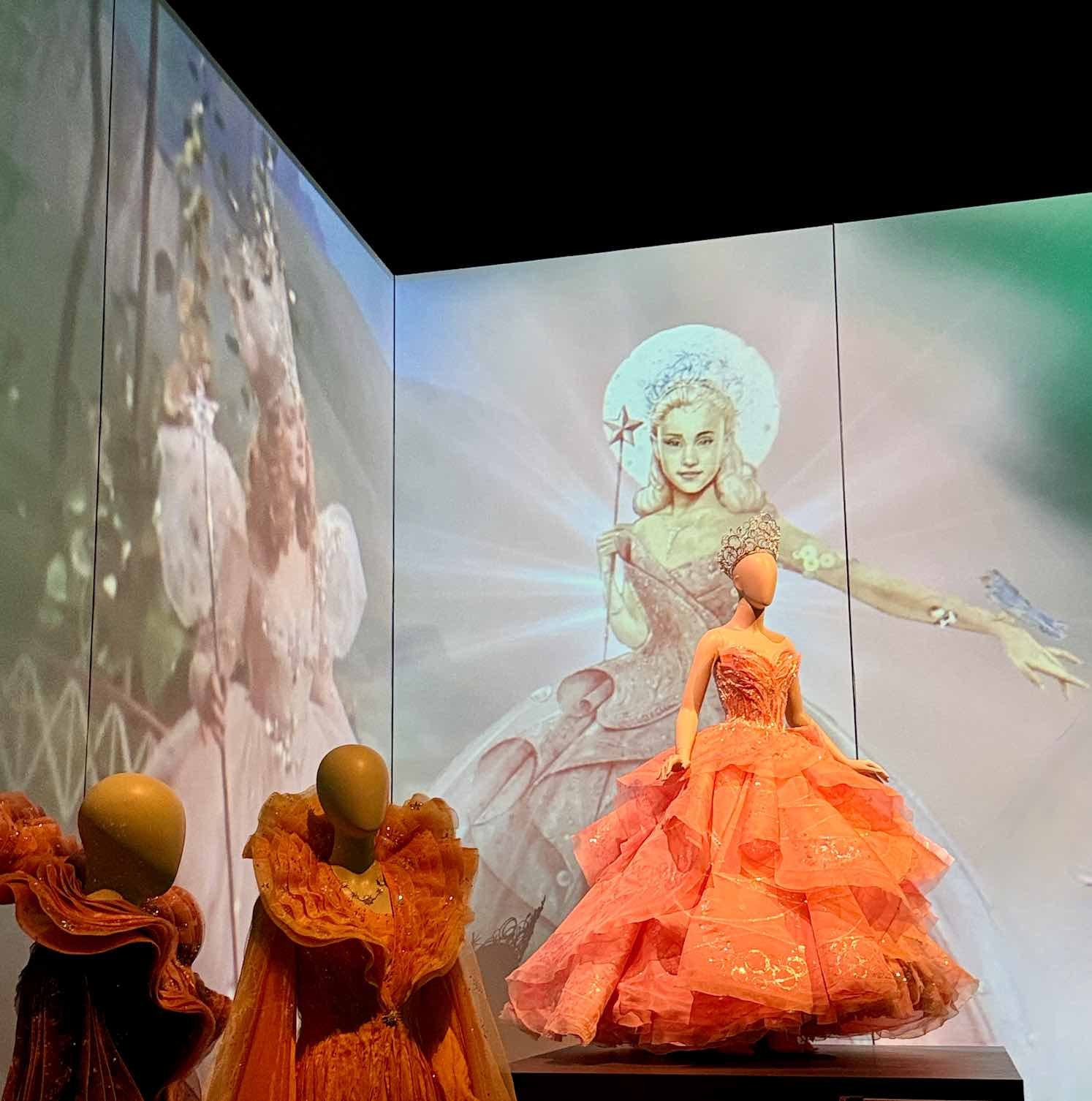
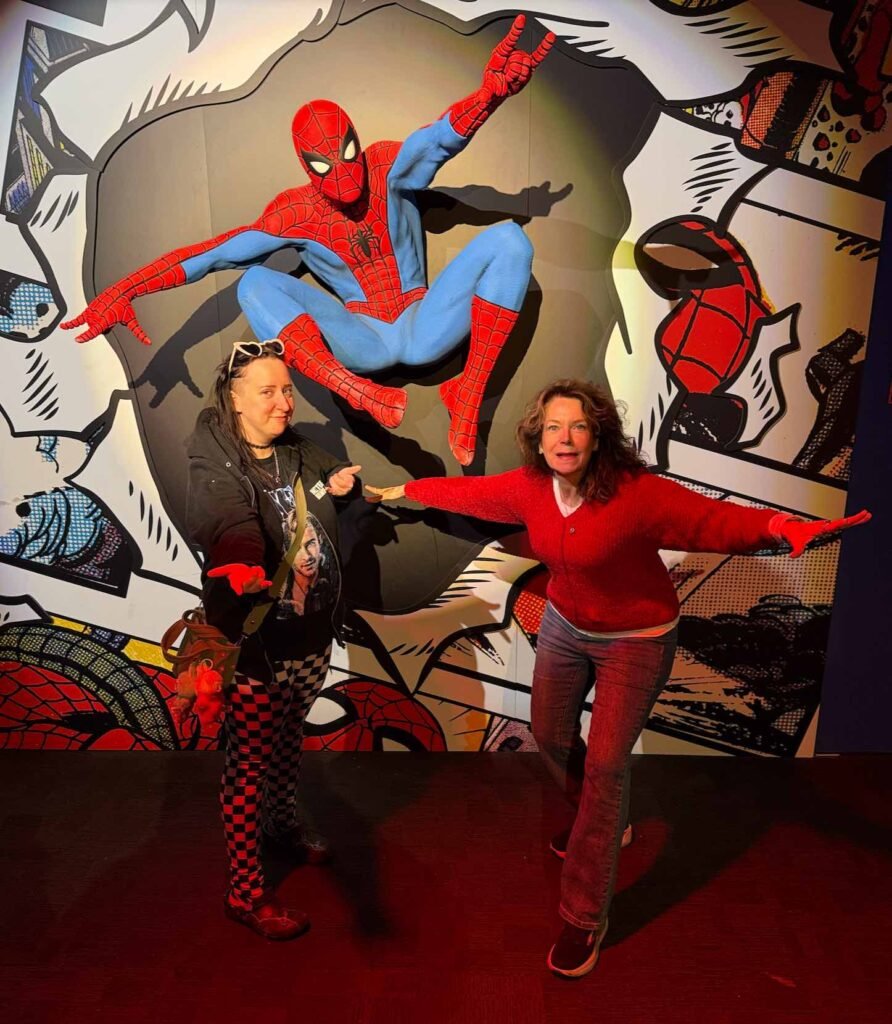
That pattern appeared repeatedly while exploring two seemingly unrelated exhibitions: Marvel’s Spider-Man: Beyond Amazing and Crafting Character: The Costumes of Paul Tazewell.
Different mediums. Same leadership truth.
Visibility Principle #1: Identity Is Designed Through Iteration
Spider-Man did not arrive fully formed.
The character struggled at first. Publishers hesitated. The concept felt risky. But Stan Lee recognized potential and stayed with it.
Spider-Man’s identity evolved through repetition, refinement, and persistence. Not certainty.
Leadership follows the same arc.
Executives do not wait until their voice feels perfect.
They step into visibility, learn through experience, and refine presence along the way.
Identity is built by wearing the role, not waiting for permission.
Visibility Principle #2: You Step Into the Role Before You Feel Ready
Costume design makes this unmistakably clear.
A costume does not create a character on its own, but it gives structure, intention, and permission. The performer grows into it through movement and repetition.
Leadership roles work the same way.
Titles, stages, platforms, and visibility act as professional costumes. They do not magically bestow authority, but they create the conditions for it to develop.
Leaders who wait to feel ready often miss the moment.
Leaders who step in intentionally grow into the role.
Visibility Principle #3: Executive Presence Is a Strategic Choice
One line from Paul Tazewell reframed the entire experience:
“To design costume is to design identity: what we show, what we hide, and what we dare to become.”
That is not a theatrical idea.
It is a leadership framework.
Executive presence is the result of conscious decisions:
- What do I reveal?
- What do I hold back?
- What am I willing to grow into publicly?
Presence is not accidental.
It is designed.
Visibility Principle #4: Presence Is Built Through Collaboration
One of the most powerful moments in the Paul Tazewell exhibition was the inclusion of artwork by his mother, Barbara Tazewell.
It was a reminder that identity does not form in isolation.
Creative excellence, like leadership, is shaped by mentorship, influence, feedback, and shared effort. The strongest leaders recognize that visibility is not a solo performance.
It is a collective act.
What This Means for Leaders and CMOs
In organizations, visibility gaps rarely stem from lack of talent. They come from hesitation.
- Waiting for confidence before stepping forward
- Over-polishing instead of experimenting
- Hiding expertise instead of designing presence
The leaders who advance fastest understand this:
Visibility precedes certainty.
Confidence follows action, not the other way around.
The WiredPRWorks Leadership Takeaway
Executive presence is not magic.
It is not personality dependent.
It is not reserved for extroverts.
It is a system.
A designed identity shaped through intention, repetition, and courage.
The most effective leaders do not wait until they feel ready.
They decide who they are becoming and step into that identity early.
That is how presence is built.
That is how influence compounds.
That is how leaders become unforgettable.
Reflection Question
Where are you waiting for confidence instead of designing presence?
About the Author
Barbara Rozgonyi is a keynote speaker, visibility strategist, and founder of CoryWest Media, Social Media Club Chicago, and WiredPRWorks. She guides executives, CMOs, and organizations to design executive presence, credibility, and strategic influence through storytelling, intentional visibility, and leadership clarity. Her work sits at the intersection of communication, creativity, and trust and helps leaders move from capable to unmistakable.
 English