What Oz, Tiffany, and Gilded Age Wizards Teach Leaders About Visibility, Legacy, Reinvention, and Magic that Lasts
Why This Story Matters for Leaders and Creators Right Now
In an era where AI curates experiences, search engines prioritize relevance, and audiences crave authenticity, the most influential brands and leaders aren’t just visible. They build worlds people want to inhabit. Chicago’s Driehaus Museum exemplifies this: a restored Gilded Age mansion housing exhibits on The Wizard of Oz and Tiffany Studios that blend history, artistry, and storytelling into immersive journeys. For executives, marketers, PR professionals, thought leaders, and Wicked fans, this isn’t just a travel spot. It’s a blueprint for crafting personal brands, thought leadership, and legacies that endure. Drawing from my own journey [Barbara Rozgonyi, publisher of wiredPRworks] as a visibility expert and former child actor in an Oz-inspired production, this post unpacks actionable lessons on intentional design, collaborative magic, and reinvention. Discover how these “wizards” of craft can elevate your influence in a crowded digital landscape.
We are all crafting worlds. And on this visit, I realized I was standing inside one.
We really were off to see the wizard. Let’s go!
Stepping Into a World of Wizards: My Pre-Wicked Pilgrimage
The week before I saw Wicked for Good for the first time, I found myself in Chicago on Thanksgiving Eve. The wind was sharp, the chill was biting… On a blustery 15 degree afternoon, I stepped into a place that felt instantly warmer and truly designed to inspire.
Tucked just off the Magnificent Mile at 50 E. Erie Street, the Driehaus Museum is a hidden gem and occupies the opulently restored 1883 Nickerson Mansion, a Gilded Age masterpiece of mosaic floors, carved staircases, and stained-glass whispers. As a keynote speaker and founder of WiredPRWorks, I’ve long advised clients on building “worlds” through storytelling and design. But walking through those doors felt like entering my own origin story: a tactile reminder that the most powerful narratives aren’t scripted in isolation. They are crafted with intention, collaboration, and a touch of wonder.
At 13, I embodied Glinda the Good Witch in a children’s theater take on The Wizard of Oz, complete with a handmade sparkly gown from my Aunt Aggie. Backstage, I once turned a tearful Munchkin kid’s isolation into instant belonging with a simple wand-wave and “Let’s make some magic.”
That early lesson in leadership (drawing people into the story) echoed through every gallery. And the unifying theme?
World-building as wizardry: the deliberate art of turning vision into legacy, much like Wicked‘s Elphaba and Glinda forging their paths. For Wicked fans, this visit is the perfect prelude, bridging Baum’s books to MGM’s 1939 film and the musical’s fresh lens on reinvention. For leaders, it’s a masterclass in visibility: how craft creates trust, stories spark connection, and beauty drives business.
The Wizards of Oz: From Page to Screen, Lessons in Collaborative Magic
Curated by Antiques Roadshow expert Laura Woolley as part of the museum’s “Drie-cember” festivities, The Land of Oz: Beyond the Page (on view through March 15, 2026) peels back the curtain on the 1939 film’s creation. This isn’t a dusty display. It’s a portal to the collaborative wizardry that birthed an iconic universe. Highlights include:
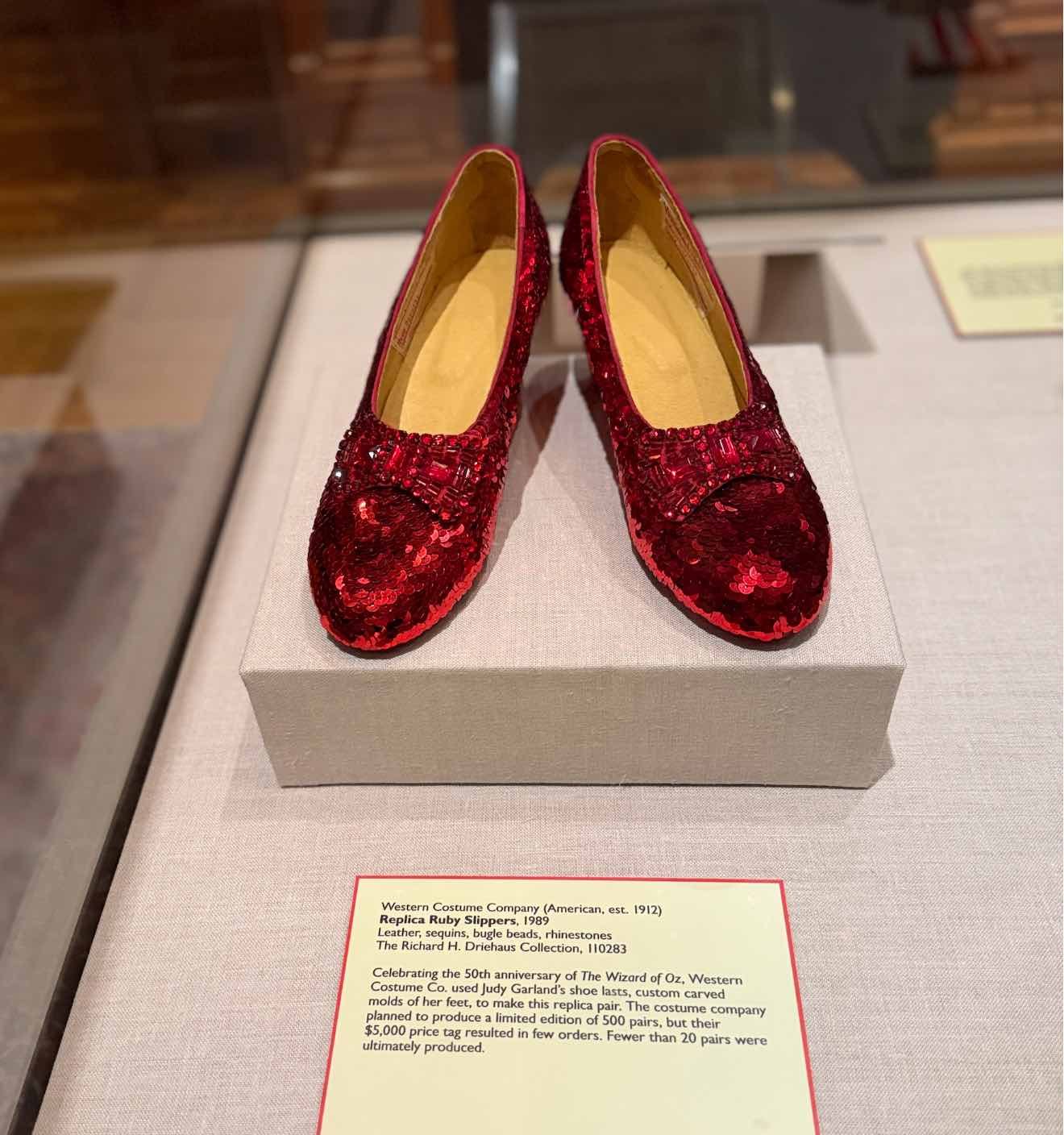
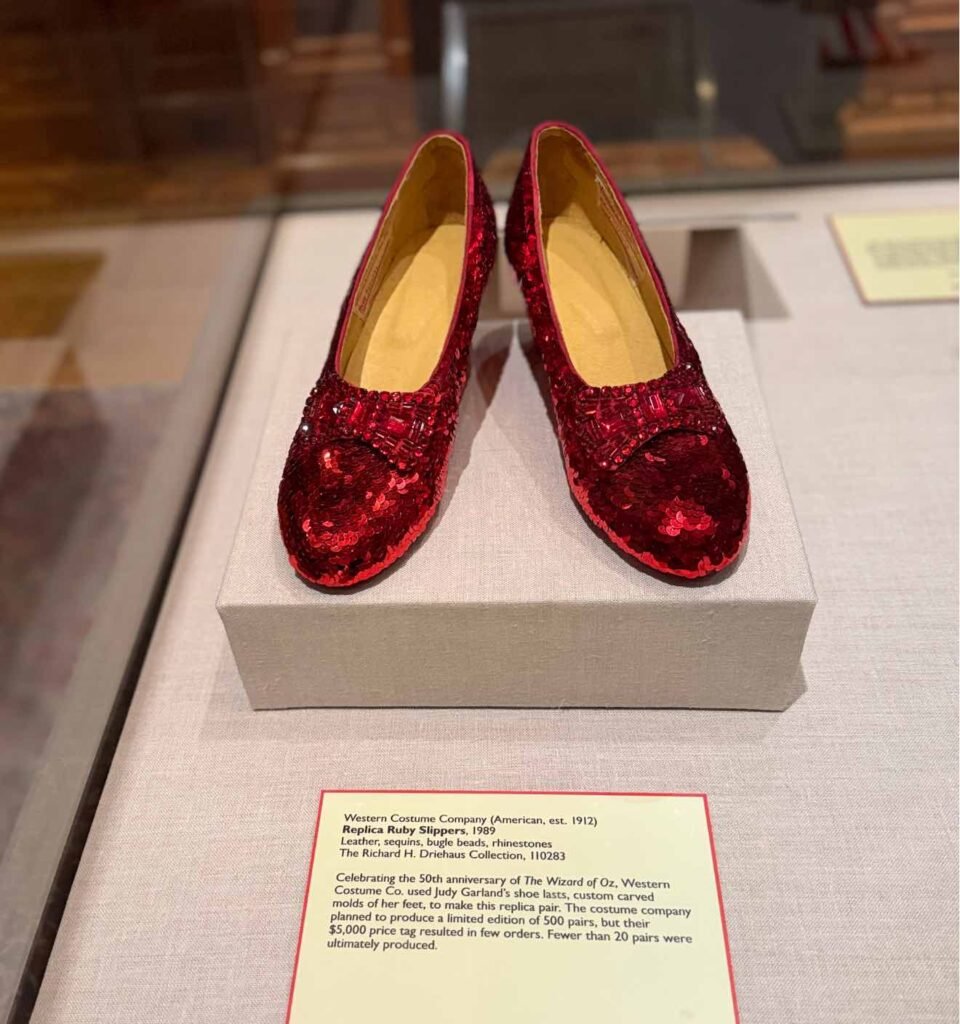
- Replica Ruby Red Slippers: A nod to the last-minute color shift from Baum’s silver originals, symbolizing adaptive reinvention.
- Early Script Drafts: Revealing the evolution from book to blockbuster, with notes on character arcs that mirror Wicked‘s depth.
- Flying Monkey Prototype Costume: Rough edges that highlight the trial-and-error behind seamless spectacle.
- Munchkin Jacket and Cowardly Lion’s Medal of Courage: Wardrobe wonders that humanize the ensemble cast.
- Emerald City Production Art: Pastel renderings that directly shaped the screen’s glittering skyline.
L. Frank Baum was the story’s grand wizard, but the real magic? His collaborators (designers, writers, and artisans) who layered sketches, revisions, and experiments into enduring visuals. For Wicked devotees, it’s a thrilling origin tale: see how Elphaba’s green skin and Glinda’s bubble drew from these roots, emphasizing themes of outsider courage and chosen family.
WIIFM for Leaders and Creators: In PR and branding, solo genius is a myth. This exhibit teaches:
- Collaboration Fuels Iconic Visibility: Like Baum’s team, assemble your “Yellow Brick Road” crew (writers, designers, AI tools) to amplify your message. Result? Content that ranks higher in searches and resonates deeper.
- Reinvention Builds Resilience: The slippers’ silver-to-red pivot? A reminder to evolve your personal brand (e.g., from corporate exec to thought leader) without losing core identity. This is key for Wicked-inspired growth mindsets.
- Emotional Hooks Drive Shares: That backstage Munchkin moment? It shows how vulnerability in storytelling (your “origin story” posts) turns audiences into advocates, boosting SEO through authentic engagement.
As I lingered by Dorothy’s slippers, I felt Glinda’s wand in my hand again: leadership isn’t about the spotlight. It’s inviting others into your Oz.
Louis Comfort Tiffany: The Wizard of Light, Material, and Market Mastery
Shifting from emerald dreams to gilded glows, Tiffany Lamps: Beyond the Shade (also through March 15, 2026) showcases over 100 pieces from Tiffany Studios (Favrile glass vases, enameled jewelry, bronze bases, and electrified lamps that pulse with innovation). Louis Comfort Tiffany wasn’t just an artist. He was a business visionary who alchemized beauty into a billion-dollar legacy.
Witness the evolution: from moody oil lamps to radiant electric fixtures, each piece a testament to materiality’s power. For design enthusiasts and Wicked fans (think Glinda’s luminous aesthetic), it’s pure enchantment (textures that evoke the musical’s shimmering score).
WIIFM for Marketers and Brand Builders:
- Innovation Without Identity Loss: Tiffany adapted to electricity like brands pivot to AI today. Lesson: Audit your “lamp.” Update your website or LinkedIn for modern tools while keeping your signature voice. This sustains SEO and positions you as an authority.
- Craft Cultivates Trust (EEAT in Action): Hand-blown glass reveals the “behind-the-shade” effort. Apply it: Back your thought leadership with case studies and personal anecdotes (like my Glinda days) to signal expertise and trustworthiness to Google and audiences.
- Design as Differentiation: Tiffany didn’t sell lamps. He sold luminosity. For you: Craft a “category of one” brand (e.g., “The Visibility Architect for Reinventors”) to stand out in AEO results and client pitches.
Tiffany’s wizardry? Proving beauty isn’t fluff. It’s a strategy that lights the path to legacy.
The Gilded Age Mansion: Samuel Nickerson and Richard Driehaus as Preservation Wizards
The Nickerson Mansion itself is the exhibit’s silent star: a 42-room symphony of Lincrusta walls, onyx fireplaces, and Sienna marble that screams Gilded Age opulence. Banker Samuel M. Nickerson commissioned it as a statement of permanence. Financier Richard H. Driehaus rescued and restored it in 2003, infusing his Oz obsession (he collected film artifacts from childhood) into a public trust.
For history buffs and Wicked lovers, it’s Elphaba’s defiance in stone: a rebellion against time’s decay. Driehaus, per museum CEO Cynthia Van Ells, found escape in the Yellow Brick Road. This mirrors how leaders use stories for solace and strategy.
WIIFM for Executives and Thought Leaders:
- Your Platform Is Your Palace: Nickerson’s home endures as a communication tool. Build yours (podcasts, keynotes, newsletters) with intentional details to convey values and attract high-caliber clients.
- Legacy Demands Preservation: Driehaus didn’t hoard. He shared. Action: Curate your digital archive (e.g., a “Wicked Wisdom” series tying personal reinvention to business) to create frameworks that outlive trends.
- Presence Over Polish: In a fast-scroll world, Gilded details teach pacing. Slow down: Use storytelling pauses in videos or posts to build emotional investment, enhancing shareability and search dwell time.
Unifying Lessons: World-Building Wizardry for Your Journey
Synthesizing Oz’s collaboration, Tiffany’s craft, and the mansion’s endurance yields a StoryBrand framework for leaders: You are the hero navigating reinvention. We (tools like AI, networks, intention) are your guide. Key takeaways:
- Craft > Speed: Icons emerge from refinement, not rushes. This is perfect for overloaded execs seeking sustainable visibility.
- Stories as Ecosystems: Align visuals, voice, and values to create immersive brands that AI loves and humans share.
- Reinvention with Roots: Channel Wicked‘s courage: Evolve boldly, but honor your “silver slippers” origins.
- Beauty as Business: Aesthetic intention boosts trust, engagement, and conversions. WIIFM realized.
This visit, pre-Wicked, crystallized it: Great leaders don’t just tell stories. They craft worlds.
If You Go: Practical Magic for Your Driehaus Adventure
- Location: 50 E. Erie St., Chicago (steps from Michigan Avenue’s bustle).
- Hours & Tickets: Open Tue–Sun, 10 AM–5 PM; $20 adults, free for kids under 18. Book via driehaus.org.
- Best For: Wicked/Oz superfans, leadership seekers, design devotees, families craving holiday sparkle.
- Pro Tip: Pair with a Magnificent Mile stroll or Wicked ticket for thematic synergy. Allow 90–120 minutes to savor without rush.
FAQ: Quick Answers for Busy Travelers and Leaders
Is the Driehaus Museum family-friendly? Yes. Kids adore the Oz artifacts and festive decor. It’s magical without overwhelming.
How long should I allocate? 90 minutes to 2 hours for both exhibits and mansion immersion. Ideal for a lunch-break escape.
Photography permitted? Absolutely, in most spaces (check gallery signs for exceptions).
Prime for Wicked fans? 100%. It deepens the lore, from Baum’s roots to MGM’s visuals, amplifying the musical’s reinvention themes.
What sets it apart from other Chicago museums? The mansion’s living history: Exhibits feel like chapters in a Gilded Age novel, not sterile displays.
Why visit as a leader? It’s professional development in disguise. Lessons on craft and collaboration translate to boardrooms, brands, and breakthroughs.
About the Author: Your Guide to Visibility Wizardry
Barbara Rozgonyi is The Visibility Architect and founder of WiredPRWorks. A Top 100 Keynote Speaker to Watch, she guides executives, entrepreneurs, creators, and communicators in building visibility that earns trust and inspires connection. With a background that spans marketing, digital PR, photography, and creative strategy, Barbara equips leaders and organizations with the tools to tell meaningful stories, design standout brands, and navigate the evolving landscape of AI powered communication. Her work blends data, creativity, and human insight to help people and companies elevate their presence and influence in ways that last. Discover more at BarbaraRozgonyi.com or LinkedIn.
Ready to Craft Your World?
What’s your next “Yellow Brick Road” (PR strategy, keynote prep, or brand reinvention)?
Continue the journey: Read how Wicked redefined courage and identity in Wicked for Good: A Review and Designed to Inspire: What the Ruby Slippers and Tiffany Teach Us About Building Iconic, Lasting Visibility on LinkedIn
Keywords: Driehaus Museum Chicago, Wizard of Oz exhibit, Tiffany lamps exhibition, executive leadership lessons, thought leadership, brand building, Gilded Age architecture, Nickerson Mansion, Louis Comfort Tiffany, L. Frank Baum, Richard H. Driehaus, Wicked musical, Chicago cultural attractions, intentional design, legacy building, Barbara Rozgonyi, wiredPRworks
 English